
Where Is the Weight is Your Trailer?
Introduction
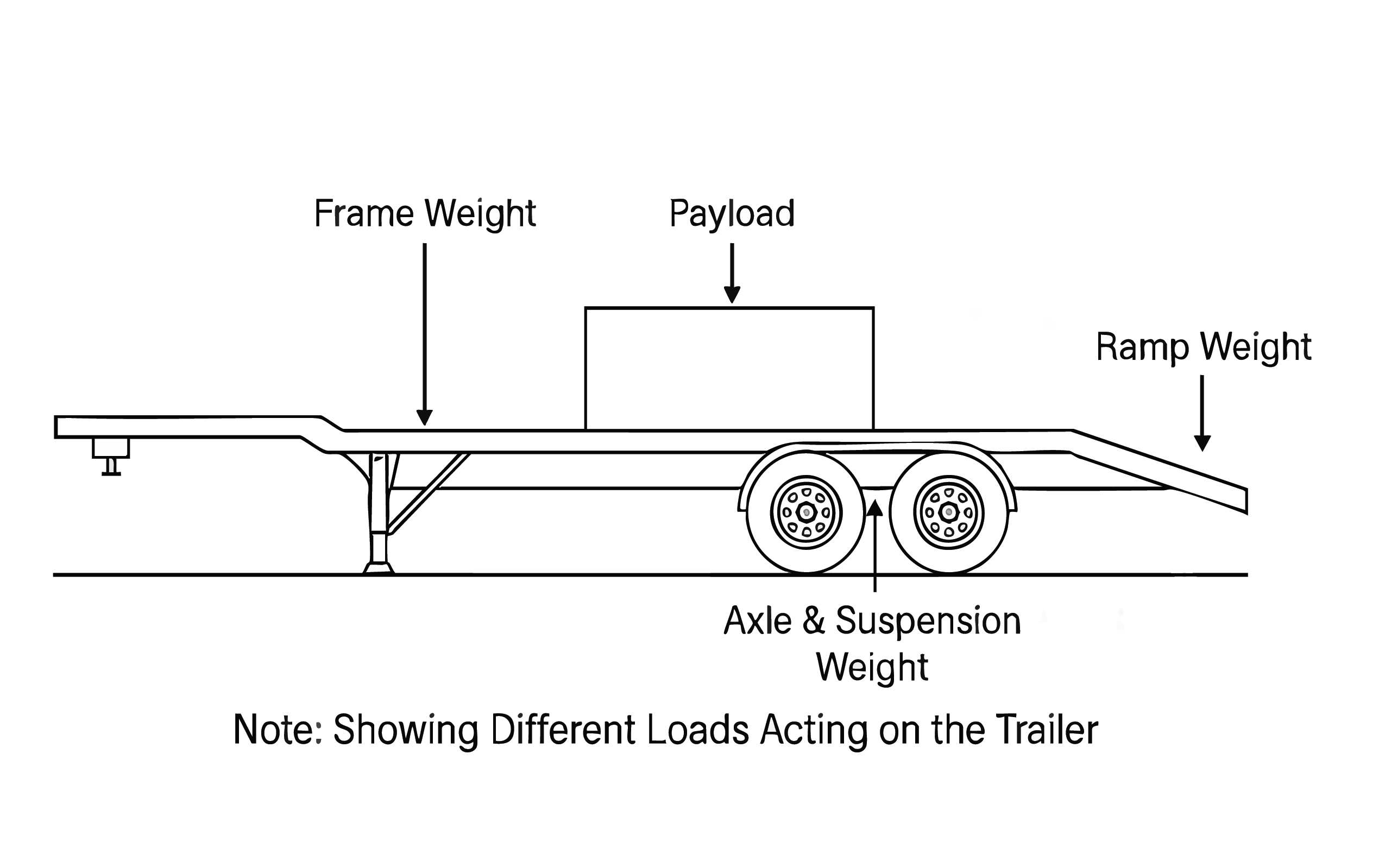
1. Why Weight Distribution Matters
Trailer weight isn’t just about the number on the scale. It’s also about where that weight is located on your trailer. While total weight is important, weight distribution plays a critical role in trailer stability, safety, and performance. Here’s a practical, bullet-point breakdown to help you understand and apply these concepts to your trailer design and loading strategy.
- Weight isn’t just weight – Placement impacts how the trailer behaves on the road.
- Tongue weight, axle location, and load distribution all influence towing safety and ride quality.
- Good distribution = better control, less sway, and reduced wear on components.
2. Key Design Consideration: Axle Position
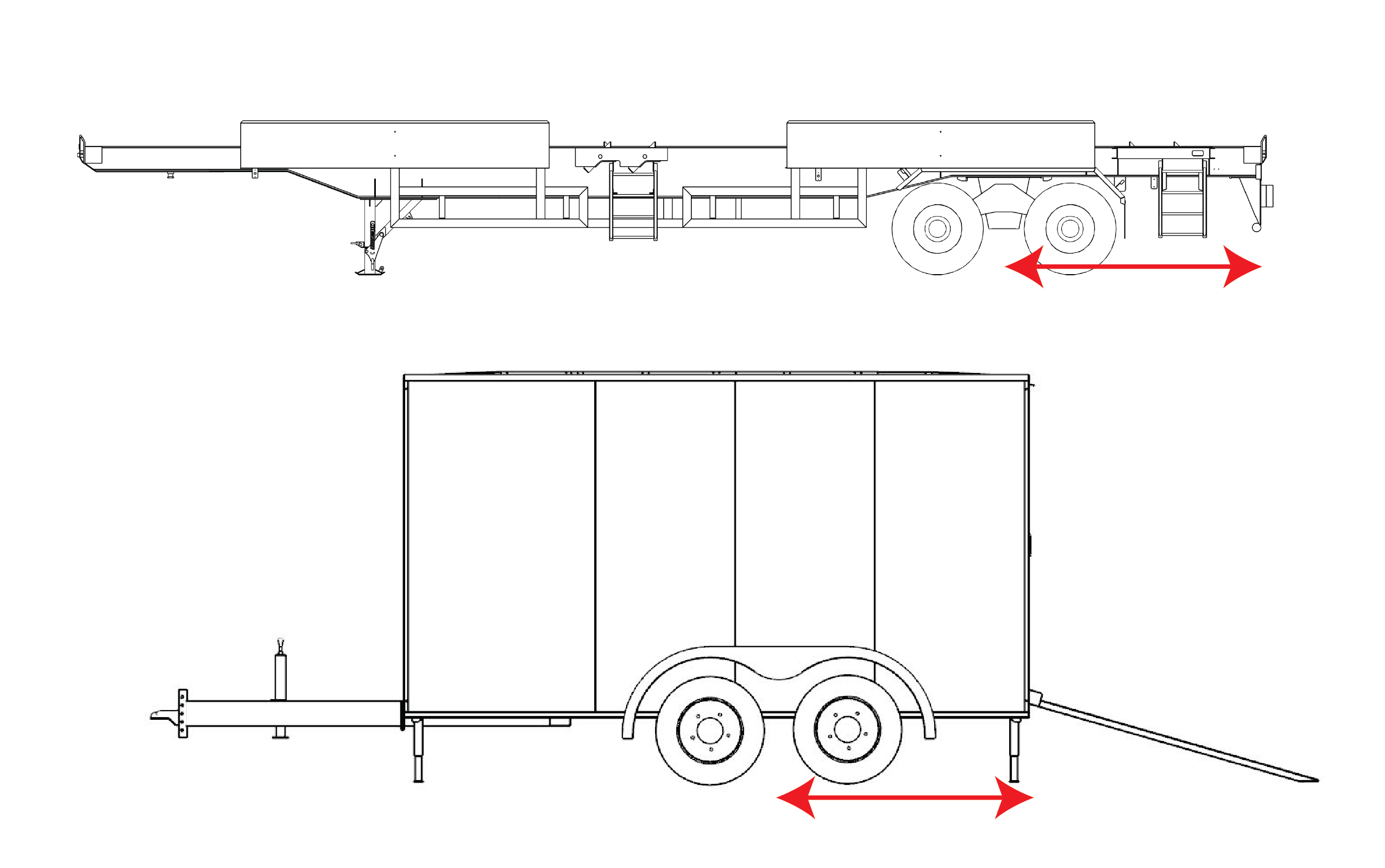
- Axle placement determines tongue weight:
- Too far forward = high tongue weights, stress on hitch and tongue.
- Too far back = low tongue weight, potential sway of fishtailing.
- Use center of gravity and load calculations to determine optimal axle location.
- Even with proper calculations, real-world loading still affects dynamics.
3. Static vs. Dynamic Loading
- Static calculations assume weight is evenly spread.
- In practice, weight often shifts during transport or is concentrated in specific areas.
- Load distribution across the trailer deck influences behavior under motion.
4. Three Load Distribution Scenarios
- Even Load: Balanced across trailer bed (ideal baseline).
- End Load: Heavy items placed at front and back (higher rotational inertia, harder to control).
- Central Load: Weight concentrated around the axle (improves stability).
5. Why It Matters: Rotational Inertia
- Loads at trailer ends = higher rotational inertia = harder to stabilize.
- Centralized loads reduce rotational inertia, improving trailer response to road inputs.
- Front-heavy loads are safer than rear-heavy, but still require care.
6. Trailer Loading Best Practices
- Keep heavy items low and centered over the axle.
- Avoid rear-heavy loading, which contributes to sway.
- Even left-to-right distribution is essential.
- Lower center of gravity improves stability in turns and crosswinds.
- Stay within all rated limits (GVWR, axle ratings, tongue load, etc.).
7. Trailer Weight Definitions & Tongue Weight Tips
- Trailer weight includes axles, wheels, tongue weight.
- Aim for 10% – 15% tongue weight, with 12% as a good target.
- Don’t exclude tongue or un-sprung weight when planning axle capacity.
- Always use actual scaled weights for accurate loading.
8. Real-World Stability Tips
- A trailer that tows fine at low speed become unstable at higher speeds.
- Longer trailers and taller structures require more attention to weight placement.
- Don’t add unnecessary items (like toolboxes or generators) at the rear.
- If the trailer feels unstable, stop immediately and inspect:
- Tire pressure
- Spring condition
- Load shift
- Trailer longue weight
9. Practical Loading Checklist
Final Thoughts
The science behind trailer stability is real, and ignoring it can lead to dangerous consequences. Design with stability in mind and always double-check your load before you hit the road. With proper distribution and attention to detail, you can ensure safe and smooth towing for every trip.
Stay safe, stay smart, and design with confidence.